

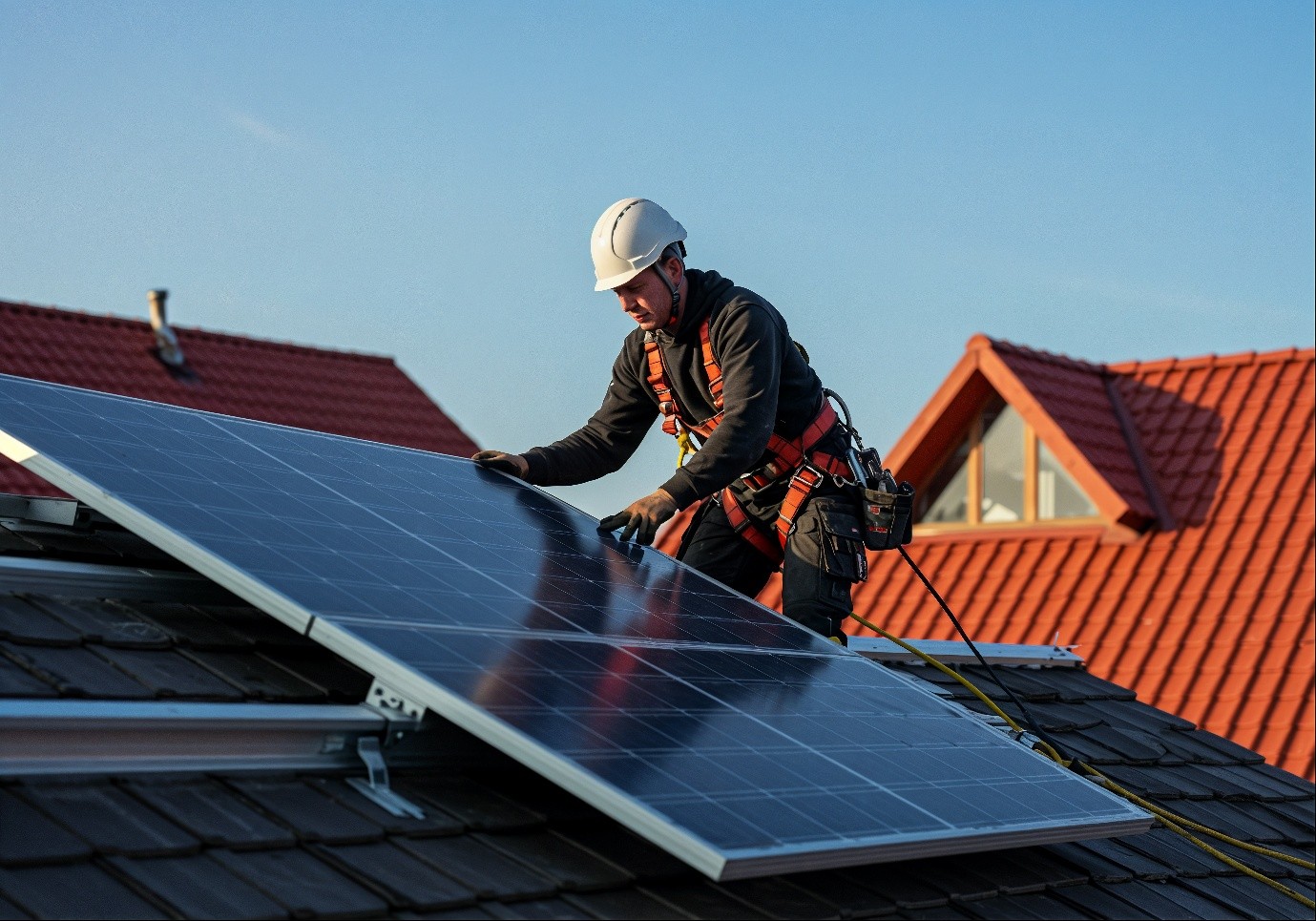
A solar power system for business cuts energy costs and boosts sustainability, but neglecting maintenance can reduce output and lead to costly repairs. Proper care ensures your solar power for commercial buildings delivers maximum ROI for 25–30 years. At Solar4Biz Pros, our expert solar system service keeps your solar power system for business running efficiently with minimal effort.

This guide details the maintenance needed to protect your investment and keep your solar power for commercial buildings performing at its peak.

  1. Cleaning Panels to Maximize Output

Dirt, dust, pollen, or bird droppings can reduce efficiency by up to 25% in extreme cases, per NREL. For solar power for commercial buildings, regular cleaning is key:

  • Frequency: 2–4 times/year in dusty areas; 1–2 times in rainy climates.
  • Method: Use soft brushes, mild soap, and a hose; avoid pressure washers to prevent cracks.
  • Timing: Clean early morning or evening to avoid thermal shock.

Solar4Biz Pros offers professional cleaning to maintain 95–98% efficiency, ensuring your solar power system for business maximizes savings.

  1. Visual Inspections for Damage

Storms, hail, or debris can cause cracks, loose mounts, or corrosion in your solar power system for business. These issues reduce output and pose safety risks.

  • Monthly Checks: Look for cracks, rust, or exposed wires.
  • Post-Storm Inspections: Assess panels, frames, and connectors after severe weather.
  • Professional Review: Schedule annual inspections with thermal imaging to detect hidden issues.

Early detection minimizes repair costs and downtime, per SEIA.

  1. Inverter and Electrical Checks

The inverter converts DC to AC power for your solar power for commercial buildings. Failures halt production. Wiring issues can cause losses or fire risks.

  • Inverter Checks: Monitor for error codes or abnormal readings quarterly.
  • Wiring Inspections: Look for corrosion or overheating annually.
  • Professional Service: Certified electricians ensure safety and compliance.

Inverters last 10–15 years (string) or 20–25 years (microinverters); plan for replacements, per EnergySage.

  1. Performance Monitoring

Modern solar power systems for business include monitoring tools to track output in real-time:

  • Live generation data
  • Alerts for faults or dips
  • Performance reports for audits

Monitoring ensures your solar power for commercial buildings meets financial and sustainability goals. Solar4Biz Pros provides 24/7 monitoring with actionable insights.

  1. Preventive vs. Reactive Maintenance

Preventive maintenance (cleaning, inspections) avoids downtime and costly repairs, unlike reactive fixes after failures:

  • Preventive Tasks: Regular cleaning, annual inspections, inverter checks.
  • Benefits: Extends system life, maintains 95–98% efficiency, reduces risks.
  • Reactive Risks: Energy loss, repair costs, and warranty issues.

Preventive care is critical for solar power for commercial buildings, per Forbes Home.

  1. Annual Professional Inspections

Annual inspections by experts ensure your solar power system for business stays compliant and efficient:

  • Check mounts, alignment, and inverters
  • Use thermal imaging for hidden damage
  • Verify safety switches and cables

Solar4Biz Pros’ inspections maximize output and longevity.

  1. Maintenance Logbook

A logbook tracks cleaning, inspections, and repairs for your solar power system for business:

  • Simplifies warranty claims
  • Tracks performance trends
  • Informs upgrades

Detailed records support audits and sustainability reporting.

  1. Post-Storm Assessments

After storms, check your solar power for commercial buildings for:

  • Cracks or scratches
  • Bent frames or mounts
  • Debris or water pooling

Professional assessments prevent hidden issues from escalating.

  1. Controlling Soiling Losses

Soiling (dirt, dust, organic matter) can cut output by 5–10% annually. For solar power for commercial buildings in dry or construction-heavy areas:

  • Clean every 3–6 months
  • Monitor output for dips
  • Adjust based on local conditions

Solar4Biz Pros tailors cleaning schedules to your site.

  1. Vegetation Management

Overgrown trees or weeds can shade panels, reducing output. For solar power systems for business:

  • Trim trees regularly
  • Use ground barriers for ground mounts
  • Clear rooftop debris

Vegetation control ensures consistent energy production.

Why Maintenance Matters

For businesses, maintenance of solar power for commercial buildings ensures:

  • Savings: Prevents 5–25% efficiency losses, saving $1,000–$5,000/year.
  • Sustainability: Maximizes clean energy output, reducing carbon footprint.
  • Safety: Avoids fire risks or electrical faults.
  • Longevity: Extends 25–30-year lifespan, per NREL.

Neglect can erode ROI, while regular care keeps your system profitable.

Maintenance Checklist

Task Frequency
Panel cleaning 2–4 times/year
Visual inspection Monthly/post-storm
Professional inspection Annually
Inverter/wiring checks Quarterly/annually
Vegetation trimming As needed
Monitoring review Weekly/monthly
Logbook updates Ongoing

Why Choose Solar4Biz Pros?

Solar4Biz Pros delivers expert solar system service for solar power systems for business:

  • 24/7 Monitoring: Real-time alerts for performance issues.
  • Professional Cleaning: Safe, efficient maintenance to maximize output.
  • Expert Inspections: Certified technicians ensure safety and compliance.
  • Tailored Plans: Maintenance schedules for your site and budget.
  • Fast Repairs: Minimize downtime with emergency support.

We keep your solar power for commercial buildings running smoothly, so you focus on your business.

Conclusion: Protect Your Solar Investment

A solar power system for business requires minimal maintenance—2–4 cleanings/year, annual inspections, and monitoring—to deliver $5,000–$20,000/year in savings and a 5–8-year payback. Solar4Biz Pros’ solar system service ensures your solar power for commercial buildings stays efficient, safe, and profitable for decades.

Ready to maintain your solar power system for business? Contact Solar4Biz Pros for a free maintenance consultation and custom plan today.

Get Started: Call or visit our website to keep your solar power for commercial buildings at peak performance.

 

Installing a solar power system for business is a smart investment, but the upfront costs can feel daunting. The federal solar tax credit for business, or Investment Tax Credit (ITC), can cut your project cost by 30% or more—if you know what qualifies. Understanding eligible expenses ensures you maximize savings and make your solar project a financial win.

At Solar4Biz Pros, we help businesses navigate the ITC, identifying every qualifying cost to boost your ROI. This guide breaks down what’s covered, what’s not, and how we streamline the process for your solar power system for business.

Why the ITC Matters

The cost of solar panel installation for businesses typically ranges from $50,000 to $200,000, depending on system size (20–100 kW). The ITC offers a 30% tax credit on eligible expenses through 2032, reducing to 26% in 2033 and 22% in 2034. This credit directly lowers your tax bill, not just your taxable income, saving thousands upfront. However, only specific costs qualify for the ITC’s “tax basis.” Missteps in documentation or calculations can cost you significant savings.

Eligible Expenses Under the ITC

Here’s what counts toward your federal solar tax credit for business:

  1. Solar Equipment

Core components of your solar power system for business are fully eligible:

  • Solar PV panels
  • Inverters (string or microinverters)
  • Racking and mounting hardware
  • Wiring, conduit, and safety disconnects
  • Sales/use taxes on equipment

These form the bulk of your tax basis, ensuring a substantial credit.

  1. Labor and Installation Costs

Labor and related services qualify, covering 10–20% of project costs:

  • Installation labor (panel setup, wiring, mounting)
  • Site preparation
  • Contractor fees
  • Permits and inspections

Including these boosts your ITC, reducing upfront expenses.

  1. Electrical and Utility Equipment

Essential electrical components for grid connection are covered:

  • Step-up transformers
  • Circuit breakers
  • Surge arrestors
  • Grid-compliance safety equipment

These costs, often significant in older buildings, add to your tax basis.

  1. Energy Storage (Batteries)

Battery storage systems with at least 5 kWh capacity qualify, whether installed with your solar system or later:

  • Examples: Tesla Powerwall, Enphase IQ Battery
  • Benefits: Store excess energy for peak demand or outages, saving $1,000–$5,000/year
  • Eligibility: No requirement for exclusive solar charging

Batteries enhance system value and increase your ITC.

  1. Interconnection Costs (Systems ≤ 5 MW)

For systems up to 5 megawatts, interconnection expenses qualify:

  • Grid connection points
  • Utility meters
  • Data systems for performance monitoring
  • Connection to distribution/transmission lines

These can add tens of thousands to costs, making their ITC eligibility a major advantage.

Bonus ITC Incentives

Your credit can exceed 30% with “adders” for specific project features:

  • Domestic Content Bonus (+10%): Use U.S.-made equipment.
  • Energy Community Bonus (+10%): Install in former coal plant or brownfield areas.
  • Low-Income Bonus (+10%): For projects in qualifying areas.
  • Prevailing Wage/Apprenticeship Bonus (+10%): For projects >1 MW meeting labor standards.

Stacking these can push your credit to 50% or more, significantly lowering the cost of solar panel installation.

What Doesn’t Qualify?

Not all expenses are eligible:

  • General Roof Repairs: Standard roof replacements don’t count.
  • Non-Solar Costs: Unrelated upgrades (e.g., HVAC) are excluded.

Exception: Incremental roof costs tied to solar (e.g., solar tiles, reflective membranes, or structural upgrades for panels) qualify with proper documentation.

Impact of Rebates on the ITC

Utility rebates (e.g., Duke Energy’s NC rebates) reduce your tax basis, lowering the ITC. Government rebates typically don’t. For example:

  • $100,000 system with a $20,000 utility rebate → ITC calculated on $80,000 (30% = $24,000).
  • Solar4Biz Pros clarifies rebate impacts to avoid surprises.

ITC vs. PTC: Which Is Better?

The Production Tax Credit (PTC) is an alternative, paying per kWh produced over 10 years. Choose based on your project:

  • ITC: Best for smaller, expensive systems or those with bonus adders.
  • PTC: Ideal for large systems in sunny areas with high output.

You can’t claim both. Solar4Biz Pros runs both scenarios to optimize your savings.

Cost Breakdown Example

For a 100 kW system:

  • Total Cost: $200,000
  • Eligible Expenses: $190,000 (equipment, labor, interconnection, batteries)
  • Utility Rebate: $20,000
  • Tax Basis: $170,000
  • ITC (30%): $51,000
  • Bonus Adders (e.g., 10% domestic content): +$17,000
  • Total Credit: $68,000
  • Net Cost: $112,000

With annual savings of $10,000–$20,000 and MACRS depreciation (5-year schedule, up to 100% bonus before 2027), payback can occur in 5–7 years.

How Solar4Biz Pros Maximizes Your ITC

Navigating the ITC requires precise documentation and expertise. Solar4Biz Pros ensures you claim every eligible dollar:

  • Cost Identification: We pinpoint all qualifying expenses, from panels to interconnection.
  • Bonus Optimization: We design systems to meet adder criteria (e.g., domestic content).
  • Documentation: We provide detailed receipts and specs for seamless tax filing.
  • Coordination: We work with your CPA to align ITC claims with depreciation and rebates.
  • System Design: We tailor your solar power system for business for maximum efficiency and savings.

Focus on your business—we handle the solar and tax details.

Why the ITC Is a Game-Changer

The federal solar tax credit for business reduces upfront costs, accelerates payback, and boosts ROI:

  • Lower Capital Risk: Cut net costs by 30–50% with credits and adders.
  • Faster Payback: Reach breakeven in 5–7 years, then enjoy 15–20+ years of near-free electricity.
  • Sustainability: Reduce your carbon footprint, enhancing your brand’s green credentials.
  • Property Value: Solar systems increase commercial property value by ~4%.

Combined with net metering and state incentives, the ITC makes solar a strategic financial move.

Act Now to Maximize Savings

The ITC is 30% through 2032, then drops to 26% in 2033 and 22% in 2034. Bonus adders and depreciation benefits also phase down after 2027. Delaying could cost thousands in lost savings, especially with rising utility rates (up 25% from 2021–2024). A solar power system for business locks in predictable costs and long-term profitability.

Why Choose Solar4Biz Pros?

Solar4Biz Pros specializes in solar panel installation for businesses, delivering:

  • Custom Systems: Designed for your energy needs and property.
  • Transparent Quotes: Clear cost breakdowns with all solar tax benefits included.
  • Expert Navigation: Full handling of ITC, rebates, and permits.
  • Premium Equipment: High-efficiency panels and inverters with 25-year warranties.
  • Ongoing Support: Monitoring and maintenance for lasting performance.

We make solar simple, affordable, and profitable.

Conclusion: Unlock ITC Savings with Solar4Biz Pros

The federal solar tax credit for business covers panels, labor, interconnection, batteries, and more, potentially saving 30–50% on your solar power system for business. With Solar4Biz Pros, you get expert guidance to maximize credits, streamline installation, and achieve rapid ROI.

Ready to cut energy costs and go green? Contact Solar4Biz Pros for a free consultation and custom ITC analysis tailored to your business.

Get Started: Call or visit our website to schedule your free solar assessment today.