
With energy costs up 25% since 2021, solar power for commercial buildings is a smart way to cut expenses and boost profitability. A key question for 2025: Are there tax benefits of solar panels available? Yes, the federal Investment Tax Credit (ITC) and new 2025 incentives offer significant savings for businesses. At Solar4Biz Pros, we maximize these tax benefits of solar panels, making solar power for commercial buildings a financial win.

This guide details 2025 tax benefits of solar panels, how to claim them, and why now is the prime time for solar power for commercial buildings.

Federal Solar Tax Credit in 2025

The ITC, a cornerstone of tax benefits of solar panels, offers a 30% credit on qualifying costs for solar power for commercial buildings starting construction in 2025. Eligible expenses include:

  • Solar panels, inverters, and racking
  • Labor, permits, and inspections
  • Batteries (≥5 kWh)
  • Interconnection costs (≤5 MW systems)

Example: A $300,000 system yields a $90,000 credit, reducing your tax bill directly, per EnergySage. The credit is secured through 2032.

Post-2025 Changes

The ITC is 30% through 2032, dropping to 26% in 2033 and 22% in 2034, per the Inflation Reduction Act. However:

  • House Proposals: Suggest ending residential credits post-2025 and accelerating commercial phase-outs.
  • Senate Support: Favors gradual reductions.
  • Why Act Now? Starting in 2025 locks in 30% and avoids potential rollbacks.

New 2025 Tax Incentives

Beyond the ITC, 2025 offers additional tax benefits of solar panels:

  1. Clean Electricity Investment Tax Credit (Section 48E): Replaces ITC post-2024, offering 30% base credit with up to 20% bonuses for:
    • U.S.-made components (+10%)
    • Low-income/energy-impacted areas (+10%)
    • Prevailing wage/apprenticeship compliance (+10% for >1 MW)
  2. Clean Electricity Production Tax Credit (Section 45Y): Pays per kWh produced over 10 years, ideal for large systems.
  3. Energy Efficient Commercial Buildings Deduction (Section 179D): Up to $5.36/sq ft for efficiency upgrades (e.g., solar, HVAC) achieving ≥25% savings, per IRS.

Stacking these can cut costs by 40–50%, per Forbes Home.

Maximizing 2025 Tax Benefits

To leverage tax benefits of solar panels:

  1. Start Early: Permits and approvals take months; begin in 2025 for full credit eligibility.
  2. Meet Deadlines: Construction must start by December 31, 2025 (visible progress).
  3. Qualify for Bonuses: Use U.S. equipment or build in eligible areas for up to 50% credits.
  4. Bundle Upgrades: Combine solar with efficiency improvements for Section 179D.
  5. Document Thoroughly: Keep records to ensure IRS compliance.

Solar4Biz Pros optimizes these steps for your solar power for commercial buildings.

Cost vs. Lifespan

Solar power for commercial buildings lasts 25–30 years, with 80–85% efficiency at the end, per NREL:

  • Years 1–7: Recover costs via savings ($10,000–$50,000/year) and tax benefits of solar panels.
  • Years 8–20: Near-free electricity with minimal maintenance.
  • Years 21–30: ~80% efficiency, still saving significantly.

The cost of solar panel installation ($50,000–$200,000) is offset by long-term value.

Example Savings

For a 100 kW system:

  • Total Cost: $200,000
  • ITC (30%): $60,000
  • Bonus Credits (10%): $20,000
  • Section 179D (50,000 sq ft at $5.36): $268,000 (if eligible)
  • Net Cost: ~$60,000–$100,000
  • Annual Savings: $10,000–$50,000

Payback occurs in 5–7 years with MACRS depreciation, per EnergySage.

Why Act in 2025?

Delaying risks:

  • ITC reduction post-2032
  • Rising installation costs (labor/materials up 25% since 2021)
  • Potential policy changes

2025 is ideal for solar power for commercial buildings to secure tax benefits of solar panels.

Is Your Building Solar-Ready?

Most buildings qualify with:

  • High electricity bills
  • Ample roof/land space
  • Long-term ownership/lease
  • Sustainability goals

Solar4Biz Pros assesses your property for optimal solar power for commercial buildings.

Why Solar4Biz Pros?

Solar4Biz Pros delivers:

  • Tax Expertise: Maximize tax benefits of solar panels (ITC, 179D).
  • Custom Designs: Tailored solar power system for business.
  • Transparent Quotes: Clear cost of solar panel installation.
  • Expert Installation: Certified crews for durability.
  • Ongoing Support: Monitoring and maintenance.

We ensure savings and compliance, so you focus on business.

Conclusion: Seize 2025 Tax Benefits

The tax benefits of solar panels—30% ITC, bonus credits, and Section 179D—make solar power for commercial buildings a financial no-brainer in 2025. Solar4Biz Pros ensures maximum savings and seamless solar panel installation for businesses. Contact us for a free consultation and custom tax analysis today.

Get Started: Call or visit our website to unlock tax benefits of solar panels for your business.
 

A solar power system for business cuts energy costs and boosts sustainability, but neglecting maintenance can reduce output and lead to costly repairs. Proper care ensures your solar power for commercial buildings delivers maximum ROI for 25–30 years. At Solar4Biz Pros, our expert solar system service keeps your solar power system for business running efficiently with minimal effort.

This guide details the maintenance needed to protect your investment and keep your solar power for commercial buildings performing at its peak.

  1. Cleaning Panels to Maximize Output

Dirt, dust, pollen, or bird droppings can reduce efficiency by up to 25% in extreme cases, per NREL. For solar power for commercial buildings, regular cleaning is key:

  • Frequency: 2–4 times/year in dusty areas; 1–2 times in rainy climates.
  • Method: Use soft brushes, mild soap, and a hose; avoid pressure washers to prevent cracks.
  • Timing: Clean early morning or evening to avoid thermal shock.

Solar4Biz Pros offers professional cleaning to maintain 95–98% efficiency, ensuring your solar power system for business maximizes savings.

  1. Visual Inspections for Damage

Storms, hail, or debris can cause cracks, loose mounts, or corrosion in your solar power system for business. These issues reduce output and pose safety risks.

  • Monthly Checks: Look for cracks, rust, or exposed wires.
  • Post-Storm Inspections: Assess panels, frames, and connectors after severe weather.
  • Professional Review: Schedule annual inspections with thermal imaging to detect hidden issues.

Early detection minimizes repair costs and downtime, per SEIA.

  1. Inverter and Electrical Checks

The inverter converts DC to AC power for your solar power for commercial buildings. Failures halt production. Wiring issues can cause losses or fire risks.

  • Inverter Checks: Monitor for error codes or abnormal readings quarterly.
  • Wiring Inspections: Look for corrosion or overheating annually.
  • Professional Service: Certified electricians ensure safety and compliance.

Inverters last 10–15 years (string) or 20–25 years (microinverters); plan for replacements, per EnergySage.

  1. Performance Monitoring

Modern solar power systems for business include monitoring tools to track output in real-time:

  • Live generation data
  • Alerts for faults or dips
  • Performance reports for audits

Monitoring ensures your solar power for commercial buildings meets financial and sustainability goals. Solar4Biz Pros provides 24/7 monitoring with actionable insights.

  1. Preventive vs. Reactive Maintenance

Preventive maintenance (cleaning, inspections) avoids downtime and costly repairs, unlike reactive fixes after failures:

  • Preventive Tasks: Regular cleaning, annual inspections, inverter checks.
  • Benefits: Extends system life, maintains 95–98% efficiency, reduces risks.
  • Reactive Risks: Energy loss, repair costs, and warranty issues.

Preventive care is critical for solar power for commercial buildings, per Forbes Home.

  1. Annual Professional Inspections

Annual inspections by experts ensure your solar power system for business stays compliant and efficient:

  • Check mounts, alignment, and inverters
  • Use thermal imaging for hidden damage
  • Verify safety switches and cables

Solar4Biz Pros’ inspections maximize output and longevity.

  1. Maintenance Logbook

A logbook tracks cleaning, inspections, and repairs for your solar power system for business:

  • Simplifies warranty claims
  • Tracks performance trends
  • Informs upgrades

Detailed records support audits and sustainability reporting.

  1. Post-Storm Assessments

After storms, check your solar power for commercial buildings for:

  • Cracks or scratches
  • Bent frames or mounts
  • Debris or water pooling

Professional assessments prevent hidden issues from escalating.

  1. Controlling Soiling Losses

Soiling (dirt, dust, organic matter) can cut output by 5–10% annually. For solar power for commercial buildings in dry or construction-heavy areas:

  • Clean every 3–6 months
  • Monitor output for dips
  • Adjust based on local conditions

Solar4Biz Pros tailors cleaning schedules to your site.

  1. Vegetation Management

Overgrown trees or weeds can shade panels, reducing output. For solar power systems for business:

  • Trim trees regularly
  • Use ground barriers for ground mounts
  • Clear rooftop debris

Vegetation control ensures consistent energy production.

Why Maintenance Matters

For businesses, maintenance of solar power for commercial buildings ensures:

  • Savings: Prevents 5–25% efficiency losses, saving $1,000–$5,000/year.
  • Sustainability: Maximizes clean energy output, reducing carbon footprint.
  • Safety: Avoids fire risks or electrical faults.
  • Longevity: Extends 25–30-year lifespan, per NREL.

Neglect can erode ROI, while regular care keeps your system profitable.

Maintenance Checklist

Task Frequency
Panel cleaning 2–4 times/year
Visual inspection Monthly/post-storm
Professional inspection Annually
Inverter/wiring checks Quarterly/annually
Vegetation trimming As needed
Monitoring review Weekly/monthly
Logbook updates Ongoing

Why Choose Solar4Biz Pros?

Solar4Biz Pros delivers expert solar system service for solar power systems for business:

  • 24/7 Monitoring: Real-time alerts for performance issues.
  • Professional Cleaning: Safe, efficient maintenance to maximize output.
  • Expert Inspections: Certified technicians ensure safety and compliance.
  • Tailored Plans: Maintenance schedules for your site and budget.
  • Fast Repairs: Minimize downtime with emergency support.

We keep your solar power for commercial buildings running smoothly, so you focus on your business.

Conclusion: Protect Your Solar Investment

A solar power system for business requires minimal maintenance—2–4 cleanings/year, annual inspections, and monitoring—to deliver $5,000–$20,000/year in savings and a 5–8-year payback. Solar4Biz Pros’ solar system service ensures your solar power for commercial buildings stays efficient, safe, and profitable for decades.

Ready to maintain your solar power system for business? Contact Solar4Biz Pros for a free maintenance consultation and custom plan today.

Get Started: Call or visit our website to keep your solar power for commercial buildings at peak performance.


Energy bills are one of the biggest pain points for Florida business owners. With utility rates rising and operational expenses piling up, many are turning to solar energy solutions for businesses in Florida. But getting started can feel overwhelming. Permits, paperwork, installation—what’s the actual process?

Here’s a clear, no-fluff look at commercial solar panel installation for businesses in Florida. Step by step.

Why More Florida Businesses Are Turning to Solar

Solar isn’t just for eco-warriors anymore—it’s a smart way to save money and stay competitive. Florida businesses are jumping on board, and here’s why:

  • Skyrocketing electricity bills? Not anymore. Solar panels slash your monthly utility costs, giving you predictable expenses.
  • Tax credits make it affordable. With federal and local incentives, you can cut installation costs by 30–40%.
  • Customers love green businesses. Showing you care about sustainability boosts your brand’s appeal.
  • Your property’s value climbs. Solar adds long-term value, making your building more attractive to buyers or tenants.

Fun fact: According to the Solar Energy Industries Association, Florida businesses can reduce energy costs by 50–75% with solar. That’s not a future dream—it’s a move you can make today to get ahead.

Step 1: Evaluate Your Building and Energy Use

Start by reviewing how much energy your business consumes. Look at your last 12 months of power bills.

Then ask:

  • Does your roof get full sun for most of the day?
  • Is the roof in good condition?
  • How much space is available?

Commercial buildings with flat or lightly sloped roofs usually work well. Even ground-mounted systems are an option for businesses with land space.

👉 Tip: A good installer will conduct a free site assessment and help analyze your energy load.
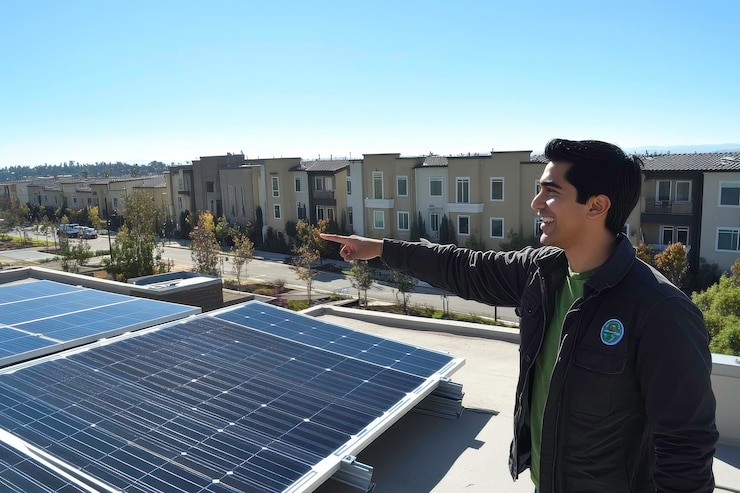

Step 2: Choose the Right Installer

Choosing the right team can make or break your solar investment. Look for experience, certifications, and proof of completed commercial projects.

What to check:

Avoid rushed decisions. A qualified installer will guide you, not pressure you.

Step 3: Get a Custom System Design

Once you’ve selected your installer, they’ll create a solar design based on:

  • Your roof layout
  • Your energy consumption
  • Budget and system goals

You’ll receive a proposal outlining expected production, costs, and savings. The design includes the number of panels, layout, inverters, and estimated return on investment.

This design is what will be submitted to permitting offices and utility companies for approval.

Step 4: Handle Permits and Utility Approval

Florida requires specific solar permits, and these vary by location. Your installer should take care of this, including:

  • Electrical permits
  • Structural reviews
  • Utility interconnection agreements

It can take a few weeks to get approvals. During this time, materials are ordered and scheduling begins.

👉 Tip: Ask your installer for updates so you stay informed during the wait.

Step 5: Solar Panel Installation Day

The actual installation of your system typically takes 1 to 5 days, depending on the size. Roof reinforcements or weather delays may add time.

Installers will:

  • Mount the racking system
  • Install solar panels
  • Wire everything to the inverters and service panel
  • Set up monitoring systems

After installation, a final inspection by the city or county is required before your utility connects the system to the grid.

Step 6: Turn on the System
Once your final inspections are approved, your utility gives the green light with a Permission to Operate (PTO). That’s when the magic happens, your solar system goes live!

From day one, your panels start generating clean electricity, cutting your energy bills. Most businesses see a 20–50% drop in their first month’s bill, depending on system size and usage. Your installer, like Solar4Biz Pros, will set up a monitoring app so you can track energy production in real-time. It’s like watching your savings grow!

To keep your system humming for 25+ years, schedule regular maintenance. This includes cleaning panels to remove dust or debris and checking inverters for peak performance. A good installer will offer maintenance plans to make this easy.

👉 Tip: Ask your installer about warranty details—most panels come with a 25-year performance guarantee!

How Much Do Commercial Solar Panels Cost in Florida?

Let’s talk numbers—because the price tag is a big deal. Here’s a breakdown of what to expect for commercial solar panel installation for businesses in Florida:

  • Average Cost per Watt: Around $2.50 to $3.50
  • Typical System Size: 50 kW to 250 kW for small to medium businesses
  • Estimated Total Cost: $125,000 to $600,000 (before incentives)

For example, a 100 kW system (perfect for a medium-sized office or warehouse) costs around $250,000–$350,000. After the 30% Federal Solar Investment Tax Credit (ITC), that drops to $175,000–$245,000. Local rebates from your utility could shave off another 5–10%, bringing costs as low as $150,000.

Florida also skips sales tax on solar equipment, so you save even more. Curious about your savings? Solar4Biz Pros offers free assessments to crunch the numbers for your business.

Maximize Your Incentives

Going solar is a big investment, but Florida businesses can tap into serious financial perks to make it affordable. Here are the top options:

Federal Solar Investment Tax Credit (ITC) – Covers 30% of the system cost. Apply when filing your business taxes—your installer can provide the paperwork to make it easy.

Accelerated Depreciation (MACRS) – Speeds up tax write-offs, putting more money back in your pocket faster.

Property Tax Exemptions – Solar systems  don’t increase your property taxes in Florida, keeping your costs down.

Local Utility Rebates – Vary by provider Check with your installer or visit DSIRE for Florida-specific programs.

Timing matters. Apply for the ITC in the tax year your system is installed, and file for local rebates as soon as your system is live. Solar4Biz Pros handles the paperwork to ensure you don’t miss out.

👉 Tip: Ask your installer to estimate your total savings from incentives before signing the contract.

How Businesses Benefit Beyond the Bill Savings

Going solar isn’t just about monthly savings. It gives you:

  • Budget predictability—no more power price spikes
  • Stronger brand value—today’s customers prefer sustainable companies
  • Higher property resale or lease value
  • Potential new income from solar renewable energy credits (SRECs)

And with panels lasting 25+ years, your investment keeps paying off well into the future.

Maximize Your Incentives

Going solar is a big investment, but Florida businesses can tap into serious financial perks to make it affordable. Here are the top options:

  • Federal Solar Investment Tax Credit (ITC): Covers 30% of your system cost. Apply when filing your business taxes—your installer can provide the paperwork to make it easy.
  • Accelerated Depreciation (MACRS): Speeds up tax write-offs, putting more money back in your pocket faster.
  • Property Tax Exemptions: Solar systems don’t increase your property taxes in Florida, keeping your costs down.
  • Local Utility Rebates: Vary by provider. Check with your installer or visit DSIRE for Florida-specific programs.

Timing matters. Apply for the ITC in the tax year your system is installed, and file for local rebates as soon as your system is live. Solar4Biz Pros handles the paperwork to ensure you don’t miss out.

👉 Tip: Ask your installer to estimate your total savings from incentives before signing the contract.

Who Can You Trust for Solar Energy Solutions in Florida?

If you’re serious about solar, you need a team that specializes in solar energy solutions for businesses in Florida. That’s where Solar4Biz Pros comes in.

They work exclusively with commercial clients—no residential side distractions. From planning to design to installation, they handle every detail with your business in mind.

They help you:

  • Cut upfront costs
  • Get all the available tax credits
  • Avoid delays and installation headaches
  • Maximize long-term savings

They’ve helped dozens of Florida businesses switch to solar without the usual stress.

Final Thoughts: Is Solar the Right Move for Your Business?

Installing commercial solar in Florida is no gimmick. It’s a real strategy to:

  • Lower long-term energy costs
  • Qualify for major tax savings
  • Increase property value
  • Strengthen your company’s sustainability profile

The process isn’t complicated if you have the right partner. And with today’s incentives and rising power rates, waiting only means leaving money on the table.

Ready to Lower Energy Costs for Your Florida Business?

Solar4Biz Pros is ready to help you design and install a custom solar system that pays off for years. Stop overpaying for electricity. Start investing in your business instead.

Get in touch with Solar4Biz Pros today and ask how your business can save thousands through commercial solar panel installation for businesses in Florida.

FAQ: Addressing Common Concerns

Thinking about solar but have questions? We’ve got you covered:

Most Florida businesses recoup their investment in 5–8 years, thanks to tax credits and energy savings. After that, you’re pocketing savings for decades.

Absolutely. Florida’s sunny climate is perfect for solar, and modern panels are built to withstand hurricanes and heavy rain. Plus, you’ll still generate power on cloudy days.

Have more questions? Contact Solar4Biz Pros for a free consultation tailored to your business.

Investing in solar panels for your business is a major decision, and one key question is: How long do solar panels last? Understanding their lifespan, maintenance needs, and long-term savings ensures your cost of commercial solar panel installation delivers a strong return. At Solar4Biz Pros, we design durable, high-performing systems to maximize your ROI for decades.

This guide breaks down the lifespan of solar panels for your business, what affects their durability, and how to make your investment last.

Solar Panel Lifespan: What to Expect

Most solar panels for your business last 25–30 years, with many continuing to produce energy well beyond that. Over time, panels experience gradual degradation, reducing output slightly each year. Key points:

  • Performance Over Time: Panels typically retain 80–85% of their original output after 25 years.
  • Continued Value: Even after 30 years, high-quality systems can still offset significant energy costs.
  • Commercial Advantage: Business systems often use premium components, ensuring longevity and reliability.

How Solar Panels Age

Degradation occurs due to exposure to sunlight, weather, and temperature changes. According to the National Renewable Energy Laboratory (NREL), modern panels lose 0.5–0.8% efficiency annually:

  • Years 1–10: Operate at ~90–95% efficiency.
  • Years 11–25: Drop to ~80–85% efficiency.
  • After 25 Years: Many still produce 75–80% of original output.

This slow decline makes solar panels for your business a durable, long-term investment.

Why Panel Quality Matters

The lifespan of your solar power system for business depends on component quality:

  • Monocrystalline Panels: Preferred for commercial use, they offer higher efficiency (>20%) and slower degradation (~0.25–0.5%/year) than polycrystalline panels.
  • Material Quality: High-grade silicon cells and robust frames resist wear.
  • Inverters: String inverters last 10–15 years; microinverters last 20–25 years. Plan for one replacement.
  • Weather Resistance: Panels are built for harsh conditions, but extreme climates (e.g., heavy snow) require certified durability.

Choosing premium equipment ensures your system lasts and performs reliably.

The Role of Maintenance

Solar panels for your business require minimal upkeep, but simple care maximizes longevity:

  • Cleaning: Remove dust, debris, or bird droppings 1–2 times/year to maintain 95–98% efficiency.
  • Inspections: Annual checks by professionals catch loose wiring or damage early.
  • Monitoring: Use apps to track output and detect issues promptly.

Regular maintenance keeps your system efficient and extends its life, protecting your cost of commercial solar panel installation.

Warranties: Your Safety Net

Most commercial panels come with:

  • Performance Warranty: Guarantees ~80% output after 25 years.
  • Product Warranty: Covers defects for 10–25 years.

These warranties, offered by top brands like Maxeon or LG, ensure your investment is secure.

What Happens After 25–30 Years?

Panels don’t stop working at 25 years—they produce less energy. Options include:

  • Keep Running: If output meets your needs, continue using the system.
  • Upgrade Inverters: Replacing inverters can restore efficiency.
  • Add/Replace Panels: Scale up or upgrade to newer, higher-efficiency panels.

Well-maintained systems often remain cost-effective beyond 30 years, especially for businesses with consistent energy demands.

Signs It’s Time to Replace Panels

Replace panels if you notice:

  • Significant Output Drops: Sudden declines beyond normal degradation (~0.5–0.8%/year).
  • Physical Damage: Cracks, corrosion, or weather-related wear.
  • Failing Inverters: Older inverters reduce system efficiency.
  • Rising Maintenance Costs: Frequent repairs outweigh savings.

Upgrading to modern panels can boost output and ROI, especially if energy needs have grown.

Cost vs. Lifespan: Is It Worth It?

The cost of commercial solar panel installation (typically $50,000–$200,000 for 20–100 kW systems) is offset by:

  • Savings: Reduce bills by $5,000–$20,000/year, depending on usage and rates.
  • Payback Period: Typically 5–7 years with federal ITC (30%) and state rebates.
  • Long-Term Value: Post-payback, enjoy 15–20+ years of near-free electricity.
  • Property Value: Solar increases commercial property value by ~4%.

With a 25–30-year lifespan, your investment delivers decades of stable, predictable energy costs.

Recycling Old Panels

Eco-conscious disposal is key. Most panels are recyclable, with programs recovering glass, silicon, and metals. Options include:

  • Refurbishing for reuse
  • Manufacturer take-back programs
  • Recycling through specialized facilities

Responsible disposal aligns with your business’s sustainability goals.

How to Extend Panel Life

Maximize your system’s longevity with these strategies:

  1. Annual Inspections: Catch issues like loose wiring or damage early.
  2. Regular Cleaning: Ensure panels are free of debris for optimal sunlight exposure.
  3. Inverter Upgrades: Replace failing inverters to maintain efficiency.
  4. Quality Mounts: Use durable racking to protect against weather damage.
  5. Performance Monitoring: Track output with apps to address issues quickly.

These steps boost ROI and extend the life of your solar panels for your business.

Why Choose Solar4Biz Pros?

Solar4Biz Pros delivers durable, high-performing solar power systems for business:

  • Custom Designs: Systems tailored to your energy needs and property.
  • Premium Equipment: High-efficiency panels and inverters with 25-year warranties.
  • Transparent Quotes: Clear cost of commercial solar panel installation with all incentives included.
  • Expert Installation: Certified crews ensure code compliance and longevity.
  • Ongoing Support: Monitoring and maintenance for peak performance.

We turn your solar investment into long-term savings and sustainability.

Conclusion: A Lasting Investment for Your Business

How long do solar panels last? Typically 25–30 years, often longer with proper care. Solar panels for your business offer decades of savings, reduced energy costs, and a boosted bottom line. The cost of commercial solar panel installation is justified by rapid payback (5–7 years) and long-term value, making solar a strategic asset.

Ready to power your business with solar? Contact Solar4Biz Pros for a free consultation and custom quote to maximize your savings and system lifespan.

Get Started: Call or visit our website to schedule your free solar assessment today.


Installing a solar power system for business is a smart investment, but the upfront costs can feel daunting. The federal solar tax credit for business, or Investment Tax Credit (ITC), can cut your project cost by 30% or more—if you know what qualifies. Understanding eligible expenses ensures you maximize savings and make your solar project a financial win.

At Solar4Biz Pros, we help businesses navigate the ITC, identifying every qualifying cost to boost your ROI. This guide breaks down what’s covered, what’s not, and how we streamline the process for your solar power system for business.

Why the ITC Matters

The cost of solar panel installation for businesses typically ranges from $50,000 to $200,000, depending on system size (20–100 kW). The ITC offers a 30% tax credit on eligible expenses through 2032, reducing to 26% in 2033 and 22% in 2034. This credit directly lowers your tax bill, not just your taxable income, saving thousands upfront. However, only specific costs qualify for the ITC’s “tax basis.” Missteps in documentation or calculations can cost you significant savings.

Eligible Expenses Under the ITC

Here’s what counts toward your federal solar tax credit for business:

  1. Solar Equipment

Core components of your solar power system for business are fully eligible:

  • Solar PV panels
  • Inverters (string or microinverters)
  • Racking and mounting hardware
  • Wiring, conduit, and safety disconnects
  • Sales/use taxes on equipment

These form the bulk of your tax basis, ensuring a substantial credit.

  1. Labor and Installation Costs

Labor and related services qualify, covering 10–20% of project costs:

  • Installation labor (panel setup, wiring, mounting)
  • Site preparation
  • Contractor fees
  • Permits and inspections

Including these boosts your ITC, reducing upfront expenses.

  1. Electrical and Utility Equipment

Essential electrical components for grid connection are covered:

  • Step-up transformers
  • Circuit breakers
  • Surge arrestors
  • Grid-compliance safety equipment

These costs, often significant in older buildings, add to your tax basis.

  1. Energy Storage (Batteries)

Battery storage systems with at least 5 kWh capacity qualify, whether installed with your solar system or later:

  • Examples: Tesla Powerwall, Enphase IQ Battery
  • Benefits: Store excess energy for peak demand or outages, saving $1,000–$5,000/year
  • Eligibility: No requirement for exclusive solar charging

Batteries enhance system value and increase your ITC.

  1. Interconnection Costs (Systems ≤ 5 MW)

For systems up to 5 megawatts, interconnection expenses qualify:

  • Grid connection points
  • Utility meters
  • Data systems for performance monitoring
  • Connection to distribution/transmission lines

These can add tens of thousands to costs, making their ITC eligibility a major advantage.

Bonus ITC Incentives

Your credit can exceed 30% with “adders” for specific project features:

  • Domestic Content Bonus (+10%): Use U.S.-made equipment.
  • Energy Community Bonus (+10%): Install in former coal plant or brownfield areas.
  • Low-Income Bonus (+10%): For projects in qualifying areas.
  • Prevailing Wage/Apprenticeship Bonus (+10%): For projects >1 MW meeting labor standards.

Stacking these can push your credit to 50% or more, significantly lowering the cost of solar panel installation.

What Doesn’t Qualify?

Not all expenses are eligible:

  • General Roof Repairs: Standard roof replacements don’t count.
  • Non-Solar Costs: Unrelated upgrades (e.g., HVAC) are excluded.

Exception: Incremental roof costs tied to solar (e.g., solar tiles, reflective membranes, or structural upgrades for panels) qualify with proper documentation.

Impact of Rebates on the ITC

Utility rebates (e.g., Duke Energy’s NC rebates) reduce your tax basis, lowering the ITC. Government rebates typically don’t. For example:

  • $100,000 system with a $20,000 utility rebate → ITC calculated on $80,000 (30% = $24,000).
  • Solar4Biz Pros clarifies rebate impacts to avoid surprises.

ITC vs. PTC: Which Is Better?

The Production Tax Credit (PTC) is an alternative, paying per kWh produced over 10 years. Choose based on your project:

  • ITC: Best for smaller, expensive systems or those with bonus adders.
  • PTC: Ideal for large systems in sunny areas with high output.

You can’t claim both. Solar4Biz Pros runs both scenarios to optimize your savings.

Cost Breakdown Example

For a 100 kW system:

  • Total Cost: $200,000
  • Eligible Expenses: $190,000 (equipment, labor, interconnection, batteries)
  • Utility Rebate: $20,000
  • Tax Basis: $170,000
  • ITC (30%): $51,000
  • Bonus Adders (e.g., 10% domestic content): +$17,000
  • Total Credit: $68,000
  • Net Cost: $112,000

With annual savings of $10,000–$20,000 and MACRS depreciation (5-year schedule, up to 100% bonus before 2027), payback can occur in 5–7 years.

How Solar4Biz Pros Maximizes Your ITC

Navigating the ITC requires precise documentation and expertise. Solar4Biz Pros ensures you claim every eligible dollar:

  • Cost Identification: We pinpoint all qualifying expenses, from panels to interconnection.
  • Bonus Optimization: We design systems to meet adder criteria (e.g., domestic content).
  • Documentation: We provide detailed receipts and specs for seamless tax filing.
  • Coordination: We work with your CPA to align ITC claims with depreciation and rebates.
  • System Design: We tailor your solar power system for business for maximum efficiency and savings.

Focus on your business—we handle the solar and tax details.

Why the ITC Is a Game-Changer

The federal solar tax credit for business reduces upfront costs, accelerates payback, and boosts ROI:

  • Lower Capital Risk: Cut net costs by 30–50% with credits and adders.
  • Faster Payback: Reach breakeven in 5–7 years, then enjoy 15–20+ years of near-free electricity.
  • Sustainability: Reduce your carbon footprint, enhancing your brand’s green credentials.
  • Property Value: Solar systems increase commercial property value by ~4%.

Combined with net metering and state incentives, the ITC makes solar a strategic financial move.

Act Now to Maximize Savings

The ITC is 30% through 2032, then drops to 26% in 2033 and 22% in 2034. Bonus adders and depreciation benefits also phase down after 2027. Delaying could cost thousands in lost savings, especially with rising utility rates (up 25% from 2021–2024). A solar power system for business locks in predictable costs and long-term profitability.

Why Choose Solar4Biz Pros?

Solar4Biz Pros specializes in solar panel installation for businesses, delivering:

  • Custom Systems: Designed for your energy needs and property.
  • Transparent Quotes: Clear cost breakdowns with all solar tax benefits included.
  • Expert Navigation: Full handling of ITC, rebates, and permits.
  • Premium Equipment: High-efficiency panels and inverters with 25-year warranties.
  • Ongoing Support: Monitoring and maintenance for lasting performance.

We make solar simple, affordable, and profitable.

Conclusion: Unlock ITC Savings with Solar4Biz Pros

The federal solar tax credit for business covers panels, labor, interconnection, batteries, and more, potentially saving 30–50% on your solar power system for business. With Solar4Biz Pros, you get expert guidance to maximize credits, streamline installation, and achieve rapid ROI.

Ready to cut energy costs and go green? Contact Solar4Biz Pros for a free consultation and custom ITC analysis tailored to your business.

Get Started: Call or visit our website to schedule your free solar assessment today.

High upfront costs often deter North Carolina businesses from adopting solar energy, but North Carolina solar rebates and solar tax benefits make it more affordable than ever. Duke Energy’s rebates, combined with federal and state incentives, can slash your solar panel installation costs significantly, delivering faster returns and lower energy bills. At Solar4Biz Pros, we streamline the process to maximize your savings and make clean energy a smart investment.

This guide explains how Duke Energy solar rebates work, how to qualify, and how we help your business harness solar tax benefits for long-term profitability.

Why Solar Rebates Matter

The cost of solar panel installation for businesses can range from $50,000 to $200,000, depending on system size (e.g., 20–100 kW). These costs include panels, inverters, labor, permits, and optional battery storage. While future savings are significant, the initial investment can feel daunting. North Carolina solar rebates and solar tax benefits reduce this burden, cutting upfront costs by 20–50% and shortening payback periods to 5–7 years.

Duke Energy Solar Rebates: What You Get

Duke Energy offers one-time rebates to make solar panel installation for businesses more affordable in North Carolina. Key details include:

  • Per-Watt Rebate: Up to $0.50–$0.75 per watt for solar panels, depending on system size (e.g., $5,000–$7,500 for a 10 kW system).
  • Limited Availability: Rebates are first-come, first-served, with funds often depleted quickly.
  • Application Timing: Programs like the previous NC Solar Rebate (closed in 2023) had tight windows, and new opportunities may arise in 2025. Act early to secure funds.

Solar4Biz Pros handles application preparation to ensure your business maximizes these rebates.

Additional North Carolina Solar Incentives

Beyond Duke Energy, North Carolina offers other incentives to lower costs:

  • Property Tax Exemption: Solar systems don’t increase your property’s taxable value, saving ~$120/year for a typical system.
  • Sales Tax Exemption: No state sales tax on solar equipment, reducing upfront costs.
  • Local Rebates: Some municipalities, like Asheville, offer permitting fee rebates ($175 for projects within city limits).

These stack with Duke rebates, making solar more accessible.

Federal Solar Tax Benefits

The federal Investment Tax Credit (ITC) is a game-changer for businesses:

  • 30% Credit: Deduct 30% of your system’s cost (after rebates) from federal taxes through 2032, dropping to 26% in 2033 and 22% in 2034.
  • MACRS Depreciation: Depreciate solar equipment over 5 years, reducing tax liability.
  • Bonus Depreciation: Deduct up to 100% of the depreciable cost in the first year for systems installed before 2027.

These solar tax benefits can cut your net cost by thousands, accelerating ROI.

PowerPair: Solar + Battery Incentives

Duke Energy’s PowerPair program, primarily for homes, offers up to $9,000 in rebates ($3,600 for solar, $5,400 for batteries) for solar-plus-storage systems. While currently residential-focused, businesses may qualify for similar battery incentives or future expansions of PowerPair. Batteries store excess energy, reducing demand charges and providing outage protection, with annual savings of $1,000–$5,000. They also qualify for the 30% ITC.

Solar4Biz Pros evaluates whether battery storage fits your business needs.

Net Metering: Boosting Savings

Net metering credits your business for excess solar energy sent to the grid, offsetting bills when panels aren’t producing (e.g., at night). In North Carolina:

  • Duke Energy’s Net Metering Bridge Rider offers credits at ~3.4 cents/kWh for excess energy.
  • Credits roll over monthly, reducing costs significantly for daytime-heavy operations.

A well-designed system maximizes these credits, enhancing your solar investment.

Cost Breakdown Example

For a 100 kW system:

  • Initial Cost: $200,000
  • Duke Rebate ($0.60/W): $60,000
  • NC Sales/Property Tax Exemptions: ~$5,000
  • Federal ITC (30% of $135,000): $40,500
  • MACRS Depreciation: Additional tax savings (varies by tax bracket)
  • Net Cost: ~$94,500

With annual savings of $10,000–$20,000 (depending on usage and rates), your system could pay for itself in 5–7 years, followed by 15–20+ years of near-free electricity.

How to Qualify for Duke Energy Rebates

To secure North Carolina solar rebates, your business must:

  • Be a Duke Energy Carolinas or Progress customer in North Carolina.
  • Install a new, grid-connected solar PV system meeting utility standards.
  • Submit a complete application during open enrollment, often with tight deadlines (e.g., May–June for past programs).
  • Work with a Duke Energy Trade Ally (like Solar4Biz Pros) for installation and interconnection.

Funds are limited, and past programs filled up quickly (e.g., 2018 rebates exhausted in weeks). Early preparation is critical.

The Solar4Biz Pros Process

We make securing rebates and solar tax benefits seamless:

  1. Site Evaluation: Assess energy usage, roof/land suitability, and sunlight exposure to design a system tailored to your business.
  2. Rebate Optimization: Size your system to meet rebate guidelines, maximizing eligibility and savings.
  3. Application Management: Handle all paperwork, including rebate applications, permits, and utility agreements.
  4. Professional Installation: Certified crews install panels, inverters, and optional batteries to meet code and ensure reliability.
  5. Tax Support: Provide documentation for ITC and depreciation claims, simplifying tax filing.
  6. Ongoing Monitoring: Offer tools and support to track performance and maintain efficiency.
Why Act Now?

North Carolina solar rebates are capped and highly competitive, often depleting within days. The federal ITC begins phasing down after 2032, reducing potential savings. Delaying could cost your business thousands in lost incentives. With rising utility rates (up 25% from 2021–2024), solar locks in predictable costs, boosting your bottom line.

Why Choose Solar4Biz Pros?

Solar4Biz Pros specializes in solar panel installation for businesses, delivering:

  • Custom Solutions: Systems designed for your energy needs and property.
  • Transparent Quotes: Clear cost breakdowns with all solar tax benefits and rebates included.
  • Expert Management: Full handling of permits, applications, and utility coordination.
  • Premium Equipment: High-efficiency panels and inverters with 25-year warranties.
  • Ongoing Support: Monitoring and maintenance to ensure long-term performance.

We focus on your savings and efficiency, so you can focus on your business.

Conclusion: Make Solar Affordable with Rebates

North Carolina solar rebates and solar tax benefits make solar a smart, affordable investment for businesses. Duke Energy’s rebates, combined with state exemptions and the federal ITC, can cut the cost of solar panel installation by up to 50%. With Solar4Biz Pros, you get expert guidance, seamless installation, and maximum savings.

Ready to lower your energy costs with solar? Contact Solar4Biz Pros for a free consultation and custom quote tailored to your business.

Get Started: Call or visit our website to schedule your free solar assessment today.


Switching to solar energy is a smart move for businesses looking to cut costs and go green, but it’s not a decision to make lightly. Poor planning can lead to unexpected expenses, delays, or underperforming systems. To ensure your solar panel installation for businesses delivers real savings, you need to ask the right questions upfront.

At Solar4Biz Pros, we simplify the process, guiding you through every step to make your solar panel installation a strategic investment. This guide outlines 11 key factors to consider, helping you avoid pitfalls and maximize the value of your solar project.

  1. Know Your Energy Needs

Before investing in solar panel installation for businesses, understand your energy consumption:

  • Review Bills: Check 6–12 months of utility bills for total kWh usage, peak demand, and seasonal patterns. For example, a small business might use 30,000 kWh/year.
  • Match Usage to Solar: Daytime-heavy operations align well with solar production. Nighttime businesses may need battery storage to maximize savings.

Accurate energy data ensures your system is sized correctly, optimizing the cost of solar panel installation.

  1. Assess Roof or Property Space

Solar panels require space, and your building’s layout matters:

  • Roof Constraints: HVAC units, skylights, or vents reduce usable space. South-facing roofs (in the U.S.) are ideal; shading from trees or buildings cuts output.
  • Alternatives: Limited roof space? Consider ground-mounted systems or solar canopies for parking lots, though these may increase installation costs.
  • Action: Get a professional site assessment to confirm space and orientation.

A tailored design ensures your system fits and performs efficiently.

  1. Check Roof Condition

Installing panels on a failing roof is a costly mistake. If your roof is over 10–15 years old:

  • Plan Repairs First: Replacing a roof after installation means removing and reinstalling panels, adding thousands to costs.
  • Match Lifespans: Panels last 25+ years; your roof should be in good shape to avoid disruptions.

A durable roof supports long-term savings and simplifies solar panel installation.

  1. Understand the Cost of Solar Panel Installation

The cost of solar panel installation varies widely, typically $50,000–$200,000 for businesses, depending on system size (e.g., 20 kW to 100 kW) and complexity. Costs include:

  • Panels, inverters, and mounting hardware
  • Labor and system design
  • Permits and inspections
  • Electrical upgrades
  • Optional battery storage

Hidden costs like roof repairs or trenching for ground systems can add up. Always request an itemized quote to know exactly what’s covered.

  1. Navigate Local Regulations and Utility Policies

Local rules and utility policies impact savings and timelines:

  • Net Metering: Some utilities offer credits for excess energy sent to the grid, boosting ROI. Others limit credits or pay less.
  • Permits: Approvals can take weeks or months, delaying your project.
  • Action: Ask your installer about local regulations and how they handle permitting.

Solar4Biz Pros manages paperwork to streamline your solar panel installation for businesses.

  1. Explore Ownership Options

Choose the financing model that fits your budget and goals:

  • Buy Outright: Highest upfront cost but best long-term savings and full tax benefits.
  • Lease: Lower upfront cost, no ownership, and no tax credits. Savings are limited.
  • Power Purchase Agreement (PPA): Pay for energy produced, not the system. No upfront cost but less control.

Buying typically offers the best ROI, especially with incentives, but leases/PPAs suit cash-strapped businesses.

  1. Leverage Incentives and Tax Benefits

Incentives significantly reduce the cost of solar panel installation:

  • Federal ITC: Deduct 30% of system costs (including installation) from federal taxes through 2032, with no cap.
  • State/Local Benefits: Rebates, property/sales tax exemptions, or bonus depreciation can cut costs by 20–50%.
  • Example: A $100,000 system could drop to $65,000 after a $30,000 ITC and $5,000 state rebate.

Solar4Biz Pros helps you maximize available incentives.

  1. Choose High-Quality Equipment

Equipment quality impacts performance and longevity:

  • Panels: High-efficiency monocrystalline panels (>20%) produce more power in less space, ideal for limited roofs.
  • Inverters: Microinverters or optimizers (20–25-year lifespan) outperform string inverters (10–15 years) for complex roofs.
  • Batteries (Optional): Store excess energy for nighttime use or outages, saving $1,000–$5,000/year for high-energy businesses.
  • Monitoring: Real-time systems track output and detect issues early.

Invest in panels with 25-year performance warranties and proven brands (e.g., Maxeon, LG) for reliability.

  1. Select an Experienced Installer

A poor solar panel installation for businesses can lead to leaks, low output, or failed inspections. Choose an installer with:

  • Expertise in commercial projects
  • Proven track record and references
  • Full permitting and utility coordination
  • Maintenance and monitoring support

Solar4Biz Pros specializes in solar panel installation for businesses, ensuring code compliance and optimal performance.

  1. Plan for Maintenance and Monitoring

Solar systems are low-maintenance but not maintenance-free:

  • Cleaning: Remove dust or debris 1–2 times/year to maintain 95–98% efficiency.
  • Inspections: Annual checks prevent issues like loose connections.
  • Monitoring: Use apps to track performance and spot problems early.

Ask about maintenance plans to protect your investment and ensure long-term savings.

  1. Set Realistic ROI Expectations

Solar is a long-term investment with a typical payback period of 5–8 years, depending on:

  • Energy savings ($5,000–$20,000/year for businesses)
  • System cost and incentives
  • Utility rate increases (2–3% annually)

After payback, enjoy 15–20+ years of near-free electricity, boosting your bottom line and property value (up to 4% higher, per studies).

How Solar4Biz Pros Makes Solar Simple

At Solar4Biz Pros, we specialize in solar panel installation for businesses, delivering tailored systems that lower costs and enhance sustainability. We provide:

  • Custom Designs: Systems sized for your energy needs and property.
  • Transparent Quotes: Clear breakdowns of the cost of solar panel installation, including incentives.
  • End-to-End Management: From permits to activation, we handle it all.
  • Premium Equipment: High-efficiency panels and inverters with 25-year warranties.
  • Ongoing Support: Monitoring and maintenance to maximize performance.

Our expertise ensures your solar project is a strategic asset, not a headache.

Conclusion: Plan Smart for Solar Success

Investing in solar panel installation for businesses can cut operating costs and boost sustainability, but success requires careful planning. By understanding your energy needs, assessing your property, choosing quality equipment, and leveraging incentives, you can maximize the value of your solar investment.

Solar4Biz Pros is your trusted partner, offering expert guidance and seamless solar panel installation. Ready to lower your energy costs? Contact us for a free consultation and custom quote tailored to your business.

Get Started: Call or visit our website to schedule your free solar assessment today.


Rising energy bills eating into your small business profits? Solar panels for small businesses offer a proven way to cut costs, boost savings, and power your operations sustainably. At Solar4Biz Pros, we help you harness solar energy to reduce operating expenses and grow your bottom line.

In this blog, we’ll explore how solar energy can benefit small businesses, reduce operating costs, and the financial incentives available.

Why Small Businesses Need Solar Energy

Utility bills can consume 20-30% of a small business’s budget. In the past 4 years, depending on the state, utility costs have increased as much as 41%. With electricity prices climbing so sporadically, controlling costs is tougher than ever. Solar panels for small business owners generate your own electricity, reducing reliance on costly grid power and delivering savings for decades.

How Solar Saves Money?

The savings on electricity bills can be substantial. With the federal business tax credit for solar, the initial cost of installing solar panels becomes more manageable.

Solar energy transforms your business’s finances in three keyways:

  • Lower Electricity Bills: Generate free power from the sun, cutting bills by 50-100% depending on your system.
  • Energy Independence: Shield your business from unpredictable rate hikes.
  • Low Maintenance: Solar panels last 25-30 years with minimal upkeep, like annual cleaning.

The federal business tax credit for solar makes going solar even more affordable, covering 30% of installation costs.

Long-Term Benefits of Solar

Solar is a smart investment with lasting rewards:

  • Break-Even in 6-10 Years: Systems often pay for themselves, then deliver nearly free electricity.
  • Higher Property Value: Solar boosts resale value by 4-6%.
  • Eco-Friendly Appeal: Attract eco-conscious customers—71% prefer green businesses.

Why Choose Solar4Biz Pros?

With over 5 years of experience, Solar4Biz Pros designs custom solar solutions tailored to your energy needs. We guide you through every step:

  1. Free energy audit
  2. Custom system design
  3. Hassle-free installation
  4. Ongoing support

We also maximize your savings by helping you claim the federal business tax credit for solar. [Case Study: We helped a local glass-blowing company cut energy costs by 85% with a tailored solar system.]

Ready to Go Solar?

Solar panels for small businesses mean lower bills, long-term savings, and a greener future. Contact Solar4Biz Pros today for a free consultation and discover how the federal tax credit can save you thousands! Call 252-387-5705 or visit www.solar4biz4pros.com.

Rising energy costs cutting into your campground’s profits? Solar panels for campgrounds can slash bills, power guest amenities, and boost sustainability. Sizing the right solar system is key to maximizing savings and reliability. At Solar4Biz Pros, we make it easy for campground owners to go solar. Here’s how to design a system tailored to your needs.

Assess Your Energy Needs

Start by calculating your campground’s daily energy use. List all appliances—RV hookups, lighting, Wi-Fi routers—and their wattage and usage hours. For example, a medium-sized campground might use 5,000-10,000 watt-hours daily. Divide this by your area’s peak sunlight hours (e.g., 5-6 hours in Virginia or Florida) to estimate required panel output. A 7,500 watt-hour daily usage with 5 sunlight hours needs a 1,500-watt system.

Choose the Right Solar Panels

Solar panels for campgrounds must be efficient and durable. Commercial-grade, 156-cell panels (570-600 watts each) are ideal for high-energy needs like powering cabins or charging stations. Consider space: a 25,000-watt (25 kW) system requires about 1200 square feet. Our team at Solar4Biz Pros selects panels optimized for your site’s layout and climate, ensuring maximum output.

Add Battery Storage

Batteries ensure power during cloudy days or at night. Match battery capacity to your daily usage—e.g., a 7,500 watt-hour campground needs at least a 7.5 kWh battery bank. Lithium-ion batteries offer longevity and efficiency. We design storage solutions to keep your campground running smoothly, even during off-grid periods.

Plan for Peak Seasons

Campgrounds see spikes in summer or holidays. Review past utility bills to identify peak demand (e.g., 30% higher in July). Add 20-25% extra panel or battery capacity to handle these periods. This ensures guests enjoy reliable power for AC, lighting, or EV charging without disruptions.

Design for Scalability

Choose a modular system to accommodate growth, like adding RV sites or amenities. Scalable inverters and wiring make it easy to expand panels or batteries later. Solar4Biz Pros builds systems with future needs in mind, saving you time and costs as your campground grows.

Work with Expert Installers

Partnering with commercial solar installation companies ensures compliance with local codes and optimal performance. Solar4Biz Pros handles everything—site assessments, custom designs, permitting, and installation. We also guide you through incentives like the federal business tax credit for solar, which cuts installation costs by 30%.

Why Choose Solar4Biz Pros?

With years of experience, Solar4Biz Pros designs solar systems tailored to campgrounds in Virginia, North Carolina, Florida, and beyond. We’ve helped sites cut energy costs by up to 90%. Our hassle-free process ensures your system powers guest satisfaction and profitability.

Ready to Power Your Campground?

Solar panels for campgrounds deliver lower bills, reliable power, and eco-friendly appeal. Contact Solar4Biz Pros for a free energy audit and see how the federal business tax credit for solar can save you thousands. Call (252) 378-5705 or visit https://www.solar4bizpros.com/ today!

As a small business owner, you’re always looking for ways to cut costs and boost profits. Solar panels for small business owners are a proven solution, yet myths about solar energy persist, keeping many from reaping the benefits. At Solar4Biz Pros, we’re here to set the record straight. Let’s debunk the top five myths about solar panels and show you how they can transform your business.

Myth 1: Solar Panels Are Too Expensive for Small Businesses

Reality: While the upfront cost of solar panels may seem high, the federal business tax credit for solar makes them affordable. This 30% tax credit significantly reduces installation costs, and many businesses recoup their investment within 5-10 years through lower energy bills. At Solar4Biz Pros, we also offer financing options to fit your budget, making solar accessible for businesses of all sizes.

Myth 2: Solar Panels Require Constant Maintenance

Reality: Solar panels for small business owners are low maintenance. With no moving parts, they require minimal upkeep—typically just an annual cleaning to remove dust or debris. Most systems come with 25-30-year warranties, ensuring long-term reliability. Our team at Solar4Biz Pros provides ongoing support to keep your system running smoothly.

Myth 3: Solar Only Works in Sunny Climates

Reality: Solar panels generate electricity even on cloudy days or in less sunny regions like Virginia or North Carolina. Modern panels are highly efficient, capturing diffuse sunlight to

Myth 4: Solar Panels Won’t Save Enough to Matter

Reality: Switching to solar can cut electricity bills by 50-75%, depending on your system and energy needs. For example, a small retail store could save thousands annually, directly boosting profits. Plus, solar protects you from rising utility rates, which jumped 10% in 2024. The federal business tax credit for solar further amplifies your savings, making solar a smart investment.

Myth 5: Installing Solar Is Too Complicated

Reality: Solar installation is straightforward with the right partner. Solar4Biz Pros simplifies the process with a free energy audit, custom system design, and hassle-free installation. We also guide you through claiming the federal business tax credit for solar, ensuring you maximize savings. From start to finish, we handle the details so you can focus on running your business.

Ready to Go Solar?

Don’t let myths stop you from saving money and going green. Solar panels for small business owners offer lower bills, long-term savings, and a competitive edge with eco-conscious customers. Contact Solar4Biz Pros today for a free consultation and discover how we can design a solar solution tailored to your needs. Call (252) 378-5705 or visit https://www.solar4bizpros.com/ to get started!


Posts pagination